Visitor's Guide to Czech Language
The Czech language is commonly known as Czech (čeština). It's a Slavic based language with similarities to languages like Russian. So, it can be complicated for visitors and speakers of romance languages like English.
But, don't worry. Prague is filled with people who can speak English. Czech is of course the main language, but English is becoming Prague's second language. Meanwhile, many older residents can speak German.
After the fall of Communism, English quickly became the second language of the Czech Republic - after years of mandatory Russian in schools.
This page discusses what visitors can expect regarding the Czech language and a few tips if you want to learn Czech.
Czech Language in Prague
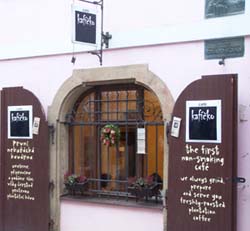 English and Czech - a common site
You can also find many foreign newspapers and publications at many kiosks and larger supermarkets like Tesco. Prague's number one English newspaper is the weekly Prague Post.
So, you don't have to learn Czech, but a few Czech phrases will make your experience a lot different.
Czechs value good manners and will really appreciate your effort. Here are four easy to remember phrases that will come in handy.
Hello and Good bye
This is a quick look at what Czech restaurants will offer in Prague. Just the basics...
First off, typical food in Prague is not diet food. So, if you're visiting Prague and traditional Czech restaurants, then consider leaving your diet at home.
Traditional meals in standard Czech restaurants can be a bit heavy for some visitors. Chefs won't be watching your diet or skimping on salt when they cook.
Please and Thank you
Please in Czech is Prosím. You can use it when approaching someone for help and it doubles as you're welcome. You will also hear this from a waiter or anyone who is giving something to you.
Thank you in Czech is Děkuju. You can use it the same way you would in English.
More Czech phrases and pronunciation help.
Tips to Learn Czech
It's not impossible to learn Czech. But, it takes a lot of
hard work - especially for native English speakers.
Here are a few basic tips to conquering this fun and challenging language:
- Take a class. A class will provide you with structure and a good grammar foundation. You don't need years of classes, just get started.
- Use Czech. No matter what you think you sound like - don't be afraid - just keep speaking and using Czech.
- Read aloud. This may sound funny, but your tongue will benefit from this practise - and your ear will start ot flex too!
- 5 Words a Day. Vocabulary will boost your confidence - but it will also help you listen better. Consider making flash cards or keep a small notebook with you too.
Czechs are proud of their language. If you get to know it, you'll see that it's very colorful and dynamic. It has an abundance of words and poetic nuances.
Children learn early on to use the Czech language through beautiful poems, songs and fairy tales. The Czech Republic is an old and wonderful Grandma with stories and surprises in its language.
We ask you to try it out - your tongue will thank you!
Home > Czech Language

Free Download!

Recent Articles


-
Guide to Charles Bridge Prague
Jan 07, 24 03:34 PM
 History and tips for visiting Charles Bridge Prague. Don't just walk across. Explore the beauty of this iconic landmark with my tips and unique angles.
 -
Best Hotel Location in Prague - Where to Stay?
Dec 16, 23 06:19 AM
 The best hotel location in Prague goes to Old Town. But, wait! Before you book your hotel, check out these areas to stay in Prague. Central and less touristy.
 -
Reliable Prague Airport Transfers, cheap and trouble free
Aug 27, 23 02:03 PM
Safe Prague Airport transfers with English speaking drivers. No app and no taxi hustle to worry about. Just friendly drivers who speak English. Book yours now.